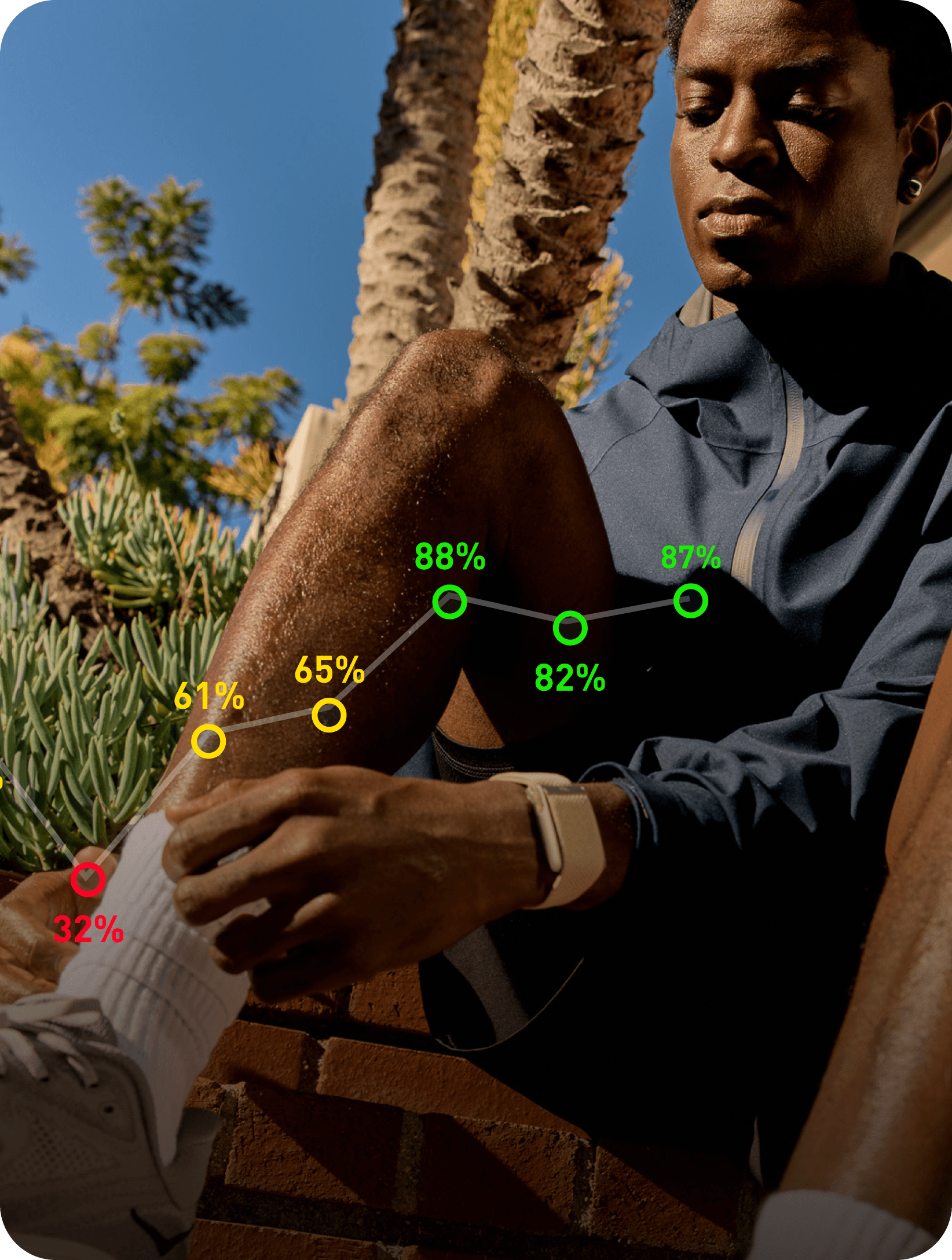
WHOOP Data Shows What GLP-1 Drugs Do to Your Heart
WHOOP released data on how GLP-1 medications (Ozempic, Wegovy) affect heart activity. Here's what it means for users.
GLP-1 drugs like semaglutide (Ozempic, Wegovy) are everywhere these days — at least in headlines about celebrity weight loss. But what do these drugs actually do to your heart? WHOOP just released an analysis of data from their wristbands, and the results are more interesting than I expected. Here's what matters.
The Setup: WHOOP as a Passive Cardiology Lab
WHOOP measures your heart rate continuously, 24 hours a day. That means they have access to a massive dataset — millions of nights, millions of workouts. And when a chunk of their users starts taking GLP-1 drugs (glucagon-like peptide-1 receptor agonists, if you want the full name), you can track what changes in the data.
That's exactly what WHOOP did. They compared metrics from users who logged GLP-1 use in the app against a control group. They focused mainly on:
- Resting Heart Rate (RHR) — how many beats per minute your heart does at rest
- Heart Rate Variability (HRV) — the variation between individual beats, a marker of your autonomic nervous system
- Recovery Score — overall recovery according to WHOOP's algorithm
What the Data Shows
Users on GLP-1 drugs showed an average lower resting heart rate compared to before starting the medication. That's not surprising on its own — a clinical trial called SELECT, published in the New England Journal of Medicine, already showed cardiovascular benefits of semaglutide in obese patients without diabetes. The reduction in cardiovascular events was roughly 20%.
More interesting is the HRV picture. WHOOP data suggests that for some users, HRV slightly increased after starting GLP-1 drugs — which would align with better balance in the autonomic nervous system. Less inflammation, less metabolic stress, a more efficient heart.
But here's the catch: this isn't data from a randomized clinical trial. It's observational data from wearable devices. Correlation, not causation. People who start GLP-1 drugs often change their diet at the same time, move more, sleep better. All of that affects RHR and HRV.
WHOOP data is fascinating for tracking trends, but it doesn't replace a cardiology exam. If you're thinking about GLP-1 drugs, talk to your doctor — not your wristband.
What This Means for You
Semaglutide (Ozempic for type 2 diabetes, Wegovy for obesity) is being prescribed more often in the US, though supply has had its hiccups. If you're one of the people taking a GLP-1 drug and also wearing WHOOP, you have a unique chance to track what's happening in your body.
A few practical tips:
- Log it in your WHOOP journal when you start the drug. You can add it as a custom tag. After a few weeks, you'll see trends in RHR and HRV.
- Watch your recovery score in context. If recovery is steadily climbing and RHR is dropping, that's a good sign — but it could also be because you're eating fewer ultra-processed foods and sleeping better.
- Don't ignore side effects. GLP-1 drugs can cause nausea, fatigue, and digestive issues. These show up in WHOOP data as worse sleep or elevated nighttime heart rate. If you see that pattern, talk to your doctor.
Why This Matters
WHOOP is gradually shifting from a pure sports tracker to a health monitoring tool. They recently added health screenings, partnered with doctors, and hired a Chief Medical Officer. Analyzing how drugs affect heart metrics is a logical next step.
For us as users, it means data from your wristband is starting to have real clinical value. Not as a replacement for your doctor — but as a complement. When you walk into your doctor's office and say "my resting heart rate dropped 5 beats over the last three months and my HRV went up 12 ms," that's a different conversation than "I feel kind of better."
My Take
I don't take GLP-1 drugs myself, so I can't verify this from personal experience. But I'm watching closely. A few people in my circle in Prague are on semaglutide, and the ones wearing WHOOP do report a steady drop in RHR. One friend showed me his graph — from 62 down to 55 beats over four months. Of course, he also lost 24 pounds in that time, so isolating the drug effect from the weight loss effect is impossible.
And that's exactly where the value of large-scale data comes in. One person can't tell what the drug caused and what lifestyle change caused. But when WHOOP analyzes thousands of users, patterns emerge. It's not a clinical trial, but it's more than anecdote.
Want a WHOOP too?
Through my link you get the WHOOP hardware free + the first month of membership free. WHOOP rewards me with one month back. Win-win, costs you nothing extra.
Get WHOOP free →